Complete Moving Guide: What You Need to Know Before You Move
Moving is stressful—there's no getting around it. But it doesn't have to be chaos if you know what you're doing. This moving guide teaches you HOW to move successfully and WHY certain approaches work better than others.
We're Happy Helpers Moving Co, a veteran-owned moving company that's helped thousands of families relocate in Sarasota, FL. We're not just giving you a to-do list—we're sharing what we've learned from years of experience. From planning to unpacking, this guide covers the strategies and decisions that make or break a move. Let's get started.

DIY Move or Hire the Pros? Here's How to Decide
This is your first big decision. Both options work, but for different situations. The decision between self-moving and hiring professional movers depends on multiple factors beyond just cost.
DIY moves make sense when you're moving to a small apartment, staying within the same city, working with a tight budget, or have friends who can help. If you've got minimal furniture and a truck rental fits your budget, doing it yourself can work.
Professional movers are worth the cost for homes with 2+ bedrooms, long-distance relocations, valuable or fragile items, physical limitations, tight timelines, or situations involving stairs and elevators. Here's the truth: most people underestimate how hard moving actually is. What seems manageable on paper becomes exhausting in reality.
The real cost comparison:
DIY seems cheaper until you factor in truck rental, gas, insurance, equipment (dollies, straps), packing supplies, food for helpers, and your time. Add potential injuries or damaged items. Professional movers cost more upfront but include labor, equipment, insurance, and expertise. You're paying for peace of mind and your time back.
| Expense Category | Professional Movers | DIY Move |
|---|---|---|
| Labor/Transportation | $800-$5,000+ (based on distance and home size) | $20-$100 daily truck rental + fuel |
| Packing Services | $200-$1,000 for full-service packing | $0 (you pack everything) |
| Packing Supplies | Often included or $50-$150 | $100-$300 (boxes, tape, bubble wrap) |
| Insurance/Protection | $200-$500 for full-value coverage | $20-$75 for basic truck insurance |
| Equipment Rental | Included (dollies, straps, blankets) | $50-$150 (dollies, furniture pads, straps) |
| Additional Help | Included in service | $100-$300 (pizza, drinks for friendls) |
| Storage (if needed) | $50-$300 monthly | $50-300 monthly |
| Travel Expense | N/A (crew handles transport) | Gas, lodging, meals during transit |
Our take: if you're questioning whether you can handle it, you probably should hire professional movers.
What Your Move Will Actually Cost You
Let's talk numbers. Moving costs in Sarasota depend on several factors, and understanding them helps you budget realistically.
What drives your moving costs:
- Distance: Local moves are charged by the hour, long-distance by weight and miles
- Home size: More rooms = more stuff = higher cost
- Time of year: Summer costs 30-50% more than winter
- Services: Packing, unpacking, storage, add to the base price
- Special items: Pianos, antiques, and hot tubs need special handling
- Access challenges: Stairs, long carries, and tight spaces increase labor time
Average costs range from $800-1,500 for local moves (2-3 bedroom home) to $2,500-7,000+ for long-distance moves, depending on distance and volume. These are estimates—your actual cost varies based on your specific situation.
Hidden costs people forget: packing supplies ($150-400), cleaning at both locations ($200-500), utility deposits ($100-300), storage if needed ($50-200/month), travel expenses for long moves, and tips for your crew.
Budget reality: whatever number you calculate, add a 15-20% buffer. Something always costs more than expected.
How to Find Movers You Can Actually Trust
Choosing the wrong moving company can turn your move into a nightmare. Here's how to find the good ones.
Look for these credentials:
- Valid USDOT license for interstate moves (verify at FMCSA.gov)
- Proper insurance coverage (ask for proof)
- Physical business address, not just a PO box
- Written estimates after seeing your home (not phone quotes)
- Real customer reviews across multiple platforms
- Trained crews, not day laborers hired that morning
Red flags that scream "run away":
- Demands a large cash deposit upfront (legit movers don't do this)
- Can't provide license or insurance documentation
- Gives estimates without seeing what you're moving
- No physical address, or won't let you visit
- History of holding belongings hostage for extra payment
- Too-good-to-be-true pricing (you get what you pay for)
Get at least three written estimates. Compare what's included, not just the bottom line. Ask how they handle damage claims, what their cancellation policy is, and how they train their crew.
At Happy Helpers, we vet every crew member, provide transparent written estimates, and carry full insurance. Our reputation depends on treating your belongings like our own.
Your Moving Timeline: When to Start What
Eight weeks is the minimum time you need for a smooth move. Anything less and you're rushing, which leads to mistakes.
Quick timeline overview:
- 8 weeks out: Start planning, get estimates, begin decluttering
- 6 weeks out: Handle paperwork, order supplies, change addresses
- 4 weeks out: Start packing non-essentials, confirm details
- 2 weeks out: Heavy packing phase, take time off work
- 1 week out: Final preparations, pack suitcases
- Moving day: Execute the plan
Adjust this timeline based on your home size. A studio or 1-bedroom might need only 4-6 weeks. A 4-5 bedroom home with a basement and attic? Give yourself 10-12 weeks.
The earlier you start, the less stressful everything becomes. Procrastination in moving always costs you—in money, stress, or both.
Get Rid of Stuff Now, Thank Yourself Later
Moving costs are calculated by weight and volume. Every item you don't move saves you money.
Purging before you pack isn't just about saving money—it's about starting fresh. Why move things to your new home that you'll just throw away later? Start this process 8 weeks before moving day.
Room-by-room decluttering method:
- Tackle one room per day (don't bounce around)
- Create four piles: keep, donate, sell, trash
- Be honest about what you actually use
- If you haven't touched it in a year, you probably don't need it
- Take photos of valuable items before deciding to keep them
Sell vs donate decision: If an item is worth over $50 and in good condition, try selling it online or at a garage sale. Everything else? Donate it for the tax deduction and good karma. Don't spend weeks trying to sell a $20 lamp—your time is worth more than that.
The average family discovers they own 30-40% more stuff than they thought. The lighter you go into a move, the easier everything becomes.
Packing Strategies That Actually Protect Your Stuff
Packing isn't just throwing things in boxes. There's a strategy that prevents damage and makes unpacking easier.
What to Pack First (And What to Save for Last)
Order matters more than you think. Pack strategically and you'll thank yourself later.
Pack in this sequence:
- Storage areas (attic, basement, garage)
- Guest rooms and spare spaces
- Out-of-season clothing and items
- Books, decorations, and non-essentials
- Kitchen (keep only daily essentials out)
- Bedrooms (except one week of clothes)
- Bathrooms (pack these last—you need them until move day)
Why this order works: you start with things you definitely don't need, building momentum and confidence. By the time you're packing daily-use areas, you're experienced and efficient. Bathrooms stay functional until the last possible moment.
Pack It Right So Nothing Breaks
We've seen it all—the good, the bad, and the shattered. Here's what actually prevents damage.
Professional packing techniques:
- Pack plates vertically like vinyl records, not stacked flat (90% less breakage)
- Put heavy items in small boxes, light items in large boxes (this is non-negotiable)
- Fill all empty spaces in boxes with packing paper or towels (items shift and break in empty space)
- Wrap each fragile item individually—don't let them touch each other
- Use your linens and towels as padding for fragile items (dual purpose, saves money)
- Never exceed 50 pounds per box (you or movers will hurt yourselves)
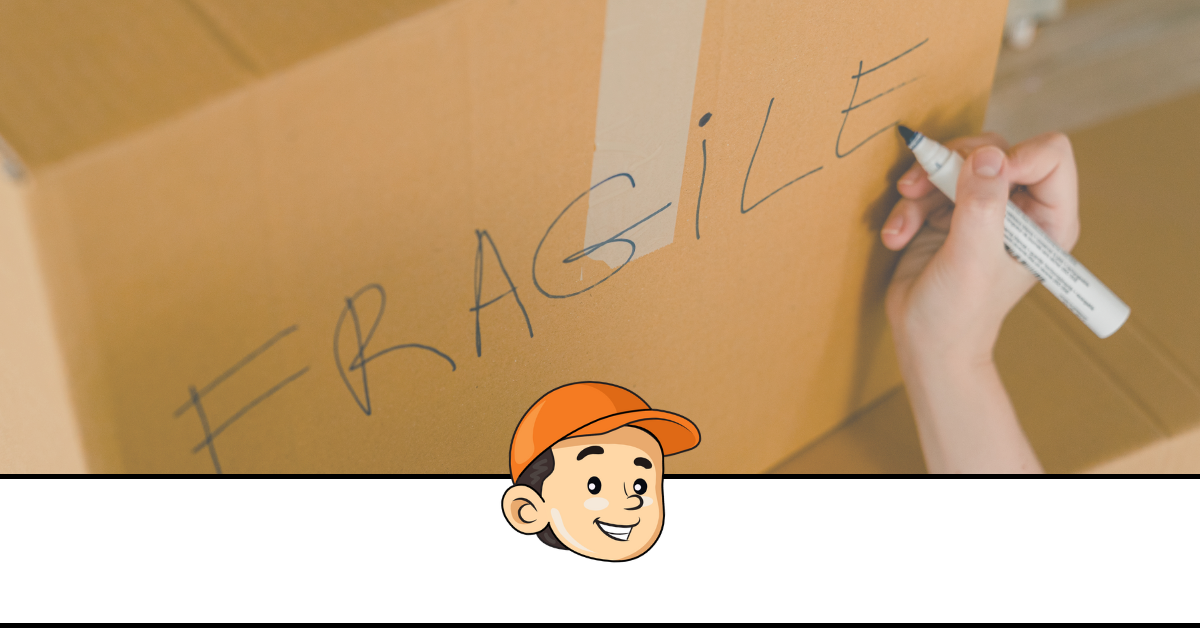
- Mark "FRAGILE" in large letters on all sides, not just the top
- Tape box bottoms with multiple strips (cheap tape and single strips cause disasters)
The most common packing mistake? Overloading boxes. A box that's too heavy to lift safely is a box that will get dropped and damaged.
Label Now, Find It Later
Poor labeling turns unpacking into an archaeological dig. Good labeling makes your first night livable.
Effective labeling system:
- Write the destination room in LARGE letters
- Add a brief contents description ("Kitchen - Pots & Pans")
- Number each box and keep a master list
- Label at least two sides (preferably all sides)
- Use color coding if you want (blue for bedroom, red for kitchen, etc.)
- Mark "OPEN FIRST" boxes on every side in huge letters
Keep a master inventory list in your moving binder. When box #47 goes missing, you know exactly what was in it. This matters for insurance claims if anything gets damaged or lost.
Your "open first" boxes should contain everything you need for your first 24 hours: bedding, towels, toiletries, phone chargers, medications, a change of clothes, basic tools, paper plates, snacks, and important documents.
What Can't Go on the Moving Truck
Movers can't legally transport certain items. Know this before packing.
Items that can't go on the moving truck:
- Hazardous materials (paint, cleaning chemicals, propane tanks, ammunition)
- Perishable food items (anything that needs refrigeration)
- Plants (most moving companies won't transport them)
- Pets (obviously, but people ask)
- Important documents (birth certificates, passports, financial records)
- Valuables (jewelry, cash, family heirlooms)
- Prescription medications
- Irreplaceable items (photos, hard drives with data)
These restrictions exist for safety and liability reasons. Hazardous materials can leak, explode, or catch fire in a moving truck. Movers' insurance doesn't cover cash, jewelry, or important documents. If it's irreplaceable, keep it with you.
Pack these items in your personal vehicle. Keep a separate bag or box that never leaves your sight during the move.

Moving Day Game Plan
Game day is here. Preparation now determines whether this goes smoothly or turns chaotic.
Before the Crew Shows Up
Don't wait for movers to arrive before getting ready.
Complete these before the moving truck pulls up:
- Arrange parking or loading zone access (check city permits if needed)
- Do your final walkthrough of every room
- Have payment ready (check, cash, or card—confirm with company)
- Put your essentials bag and important documents in your car
- Confirm utilities are set up at your new place
- Charge your phone fully (you'll need it)
Being ready when the crew arrives saves time and money. If they're standing around waiting for you to finish last-minute tasks, that's billable time.
How to Work With Your Moving Team
Moving works best when you and the crew are on the same page.
What you should do:
- Stay accessible where they can find you for questions
- Walk through your home together before they start loading
- Point out any fragile, valuable, or special-handling items
- Communicate any concerns or specific requests
- Offer water, especially on hot days
- Keep kids and pets in a safe room or at a friend's house
What not to do:
- Micromanage every box they pick up
- Pack last-minute items while they're trying to work
- Disappear for hours without telling them how to reach you
- Let stress make you short-tempered with the crew
- Forget to feed yourself (hungry, tired, you make bad decisions)
Clear communication prevents problems. If you want your antique dresser handled a certain way, tell them upfront. Don't assume they know what's important to you.
Final Walkthrough Before You Leave
This is your last time in this home. Check everywhere.
Before locking up for good:
- Walk through every single room, even ones you think are empty
- Open every closet, cabinet, and drawer
- Check attic, basement, and garage
- Look under the stairs and in storage spaces
- Turn off all lights and ceiling fans
- Adjust the thermostat to the appropriate setting
- Close and lock all windows and doors
- Take photos or video of the empty home (protects you from damage claims)
- Leave keys, garage openers, and remotes where arranged
Take a moment. This home held memories. It's okay to feel emotional about closing this chapter. Then lock the door and look forward to what's next.
Settling In: Your First Week
You made it to your new place. Now the work of making it home begins.
What to Do on Day One
Don't try to unpack everything immediately. Focus on safety and basics.
Day one priorities:
- Change or rekey all locks (you don't know who has old keys)
- Test all smoke detectors and carbon monoxide alarms
- Make every bed with clean sheets (you'll be exhausted tonight)
- Set up bathrooms so they're fully functional
- Verify all utilities work (lights, water, heat/AC)
- Unpack your "open first" boxes
- Order takeout for dinner (you earned it)
Safety comes before decorating. Make sure smoke detectors work, you know where shutoffs are located, and locks are changed. Everything else can wait until tomorrow.
Sarasota residents establish power through Florida Power & Light with advanced setup and deposit requirements. Water and sewer services connect through the City of Sarasota Utilities department, requiring similar advance notice.
Unpack Smart, Not Fast
Rushed unpacking leads to poor organization. Take your time and do it right.
Strategic unpacking approach:
- Complete one entire room before starting another
- Start with the kitchen and bathrooms (most-used spaces)
- Then bedrooms, so everyone has personal space
- Living areas next
- Save decorating and organizing for last
- Break down and remove boxes immediately after emptying them
Don't let unpacked boxes pile up. The longer they sit, the less motivated you become to deal with them. Set a goal of one room per day or every other day, depending on your schedule.
Reality check: most people take 2-4 weeks to fully unpack and settle in. That's completely normal. If you're still living out of boxes after 6 weeks, though, it's time to push through and finish.

Special Situations: Kids, Pets, and Long Distances
Not all moves are created equal. Some need special consideration.
Moving With Kids Without the Meltdowns
Kids handle moving stress differently depending on their age. Here's how to help.
Make moving easier for kids:
- Involve them in age-appropriate decisions (paint color for their room, where furniture goes)
- Let them pack their own "special items" box with their favorite toys
- Keep daily routines as normal as possible (same bedtime, same meals)
- Visit the new home and neighborhood before moving if possible
- Arrange goodbye activities with friends (don't just disappear from their lives)
- Talk honestly about the move without overwhelming them
Young kids need reassurance that their stuff is coming with them. Teenagers need to process the social impact. All ages benefit from having some control over the process.
Keep Your Pets Calm During the Chaos
Moving is terrifying for pets. They don't understand what's happening.
Reduce stress for your animals:
- Keep them in a quiet room or at a friend's house on moving day
- Update ID tags and microchip information before you move
- Pack a pet essentials box (food, bowls, leash, litter box, medications)
- Set up a safe space in your new home first thing
- Maintain their normal feeding, walking, and play schedule as much as possible
- Give them extra attention during the transition
Never let your pet loose in an unfamiliar place. They might bolt, and you'll never find them. Keep cats and dogs secured until they're comfortable with the new home.
Long-Distance Moves Need Extra Planning
Moving across states or across the country requires different preparation.
Long-distance move considerations:
- Plan your travel route with realistic daily driving distances
- Book pet-friendly hotels in advance if driving with animals
- Consider shipping some items if it's cheaper than moving them
- Keep essentials accessible in your car (clothes, toiletries, medications, important documents)
- Schedule utilities at least 2 weeks in advance at your new location
- Research your new area thoroughly before arriving
Long-distance moves also mean you probably can't visit your new place before moving day. Do virtual tours, use Google Street View, join local Facebook groups, and research schools and neighborhoods online.
Mistakes We See on Every Move (Don't Make These)
Learn from others' mistakes. These happen constantly, and they're all preventable.
Planning mistakes that cost you:
- Booking movers too late and settling for whoever's available
- Not getting written estimates (verbal quotes mean nothing)
- Underestimating how much stuff you own by 30-50%
- Forgetting to measure furniture against doorways (sofas get stuck)
- Skipping moving insurance to save $50 (then losing $5,000 in damage)
Packing mistakes that break things:
- Overloading boxes until they're too heavy to lift safely
- Not labeling boxes clearly or at all
- Mixing items from different rooms in the same box
- Packing things you need immediately (toothbrush, phone charger, work clothes)
- Using damaged or weak boxes that collapse
Moving day mistakes that cause problems:
- Not keeping anything in your car for yourself (change of clothes, medications, documents)
- Failing to supervise the inventory process (then disputing what was moved)
- Being unprepared when the crew arrives (costs you time and money)
- Forgetting cash for tips (awkward if you want to tip)
- Not checking items as they're unloaded (damage claims require immediate documentation)
Most of these mistakes come from rushing. Give yourself enough time, and most problems never happen. Knowing how to plan a move across Sarasota, FL, or coordinate a cross-country journey will help you catch details before they become problems.
How to Save Money Without Making Life Harder
Moving is expensive, but there are legitimate ways to reduce costs.
Smart money-saving strategies:
- Move off-peak: Fall and winter moves cost 30-50% less than summer
- Choose mid-week, mid-month: Weekends and month-ends are premium pricing
- Source free boxes: Liquor stores, bookstores, and grocery stores give them away
- Pack yourself: Full-service packing adds hundreds to thousands to your bill
- Purge ruthlessly first: Less stuff = lower cost (charge by weight/volume)
- Compare multiple quotes: Prices vary significantly between companies
- Ask about discounts: Military, senior, AAA, and off-season discounts exist
When it's worth spending more:
- Professional movers for homes over 2 bedrooms (DIY "savings" disappear in hidden costs)
- Quality packing materials (cheap tape and weak boxes cause damage)
- Adequate insurance for valuable items (replacement costs exceed insurance costs)
- Professional packing for extremely fragile items (pianos, antiques, art)
Balance cost savings with peace of mind. The cheapest option isn't always the best option. Saving $300 on a move but losing $2,000 in damaged belongings isn't actually saving money.
After the Move: Don't Forget These
Moving day is done, but you're not finished yet.
First week administrative tasks:
- Update your driver's license (30 days in most states—check your state's deadline)
- Register vehicles at the new address
- Change voter registration to the new district
- Update the address with all banks, credit cards, and financial institutions
- Register kids in the new school district
- Get pet licenses if your city requires them
- Update address with insurance companies (home, auto, life, health)
First month settling-in tasks:
- Hang pictures and personal items to make it feel like home
- Introduce yourself to immediate neighbors
- Explore your new neighborhood and find favorite spots
- Establish new routines (grocery shopping, gym, coffee shop)
- Join community groups or activities if that's your thing
Don't rush the settling-in process. Your new place becomes home gradually, not overnight. Give yourself grace during the transition. Some days you'll feel excited about the fresh start. Other days, you'll miss your old place. Both are normal.

Ready to Make Your Move?
You now have a complete moving guide covering everything from planning to settling in. Knowledge is power, and you're equipped to handle your move successfully. These packing tips for moving ensure different belongings get the right handling based on what they're made of and how they're shaped.
Moving is stressful, but it doesn't have to be chaotic. The difference is preparation and having the right team. This guide gave you the preparation piece.
We're Happy Helpers Moving Co., a veteran-owned moving company that's helped thousands of families relocate successfully. Our approach comes from years of training in logistics and execution. Our crew is trained to treat your belongings like they're our own. We take pride in every job we complete.
Get your free moving estimate today. We'll build a custom plan based on your specific situation, timeline, and budget.
Here's to your fresh start.